30 Years of ebro Routine and Validation Data Loggers
Standards-Compliant Process Monitoring According to DIN EN ISO 15883 and DIN EN ISO 17665
The compliant reprocessing of medical devices is now based on a consistently process-oriented approach. Central to this are the requirements of DIN EN ISO 15883 for washer-disinfectors (WDs) and DIN EN ISO 17665 for steam sterilization. Both standards require objective evidence of reproducible and effective processes under real operating conditions. The necessary metrological foundation for this is provided by routine and validation data loggers, which have become integral components of modern validation concepts.
Normative Framework: Verification Instead of Assumption
DIN EN ISO 15883 and DIN EN ISO 17665 do not require indirect evidence but rather the physical verification of critical process parameters.
Key requirements include:
- Continuous measurement of temperature, time, and, where applicable, pressure
- Verification of uniformity throughout the load
- Reproducible process execution
- Documented evaluation within IQ / OQ / PQ activities
- Regular routine monitoring and requalification.
This makes one point clear: Process efficacy must be measured, not assumed.
Differentiation: Validation Loggers vs. Routine Loggers
Standards and industry guidelines clearly distinguish between two applications:
Validation Loggers
Used during initial validation and performance qualification (PQ) as well as requalification.
- High-precision, often multi-channel measurement systems
- Placement in worst-case locations
- Complete process mapping
- Basis for process approval and release
Routine Loggers
Used during daily operation for ongoing process monitoring.
- Regular verification of process consistency
- Spot checks or cyclical monitoring
- Early detection of process deviations
- Support for periodic requalification
Both systems are normatively linked: Validation establishes the reference process – routine monitoring confirms its ongoing stability.
DIN EN ISO 15883: The A₀ Value as a Key Performance Criterion
For washer-disinfector processes, the A₀ concept is the primary evaluation criterion for thermal disinfection.
The A₀ value describes:
- The thermal impact on microorganisms
- As a function of temperature and exposure time
- Referenced to a temperature of 80 °C
Practical Implications for Measurement Technology:
- Complete and highly time-resolved temperature recording
- Accurate representation of heating, holding, and cooling phases
- Multiple measuring points for temperature distribution analysis
Typical Requirement:
- A₀ ≥ 3000 → the common benchmark for semicritical medical devices in Germany and many European countries.
Determination of the A₀ value is only possible on the basis of valid measurement data and therefore directly depends on the use of suitable data loggers.
DIN EN ISO 17665: Sterilization Validation and Physical Evidence
In steam sterilization processes, DIN EN ISO 17665 requires:
- Precise recording of temperature and pressure profiles
- Verification of saturated steam conditions
- Assessment of exposure times at sterilization temperature
- Reproducibility of all process cycles.
Again, the principle is clear: Validation loggers provide the basis for performance qualification, while routine loggers and electronic Bowie-Dick tests ensure continuous process safety.
In conjunction with EN 285 (large sterilizers) and EN 13060 (small sterilizers), additional requirements apply for process monitoring and functional verification, including Bowie-Dick testing.
Guideline for the Validation of Automated Cleaning and Disinfection Processes (DGKH, DGSV, AKI)
Practical implementation of the standard requirements has been further specified through the German guideline for validation of automated reprocessing processes.
- Minimum requirements for measurement systems
- Calibration and accuracy requirements
- Number and positioning of loggers
- Evaluation of temperature distribution within the chamber.
It clearly states that: Only suitable, validated, and calibrated measurement systems may be used for process evaluation.
Technological Development: 30 Years of Routine and Validation Data Loggers
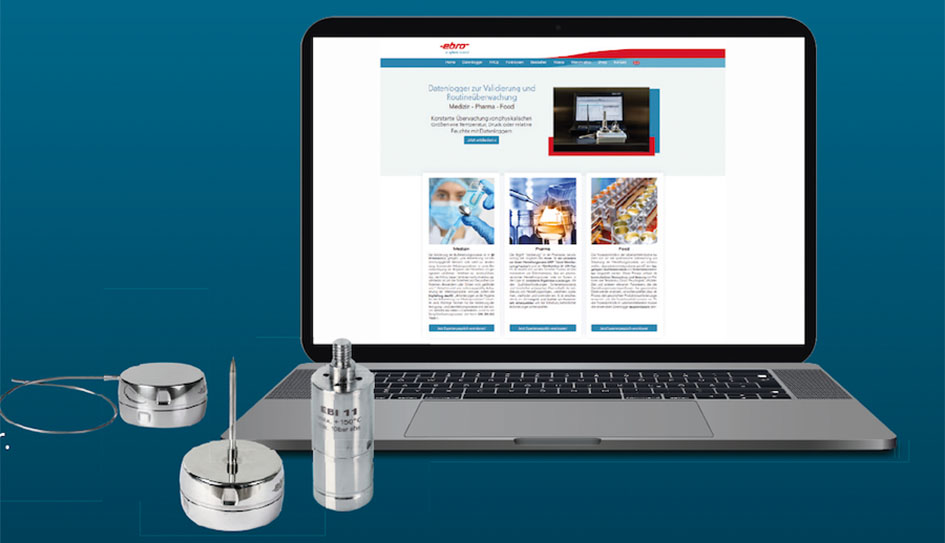
Against this regulatory background, ebro systematically advanced its data logger technology toward validation applications. A key driving force was Wolfgang Klün, who, as Managing Director, recognized the strategic importance of validation data loggers at an early stage and actively promoted their development.
Major Milestones:
- 1996 – EBI 125A Series — Early generation of specialized validation loggers for thermal process applications.
- 2006 – EBI 10 Series — Establishment of data loggers for validation and routine monitoring in washer-disinfectors and sterilizers.
- 2018 – EBI 12 Series — Introduction of highly precise sensor technology and support for advanced validation applications.
- 2012 – EBI 16 Bowie-Dick System — Elektronischer Bowie und Dick Test
- 2026 – New Data Logger Series EBI 111
Today, these systems fully cover the requirements of both validation and routine process monitoring.
Software Validation and Data Integrity
Standards compliance does not end with measurement. Equally important is the validated evaluation of the collected data.
Requirements according to international standards and GMP-oriented environments include:
- Automatic evaluation of cleaning and disinfection processes
- Automatic calculation of A₀ values and relevant process parameters
- Complete data traceability
- Audit readiness.
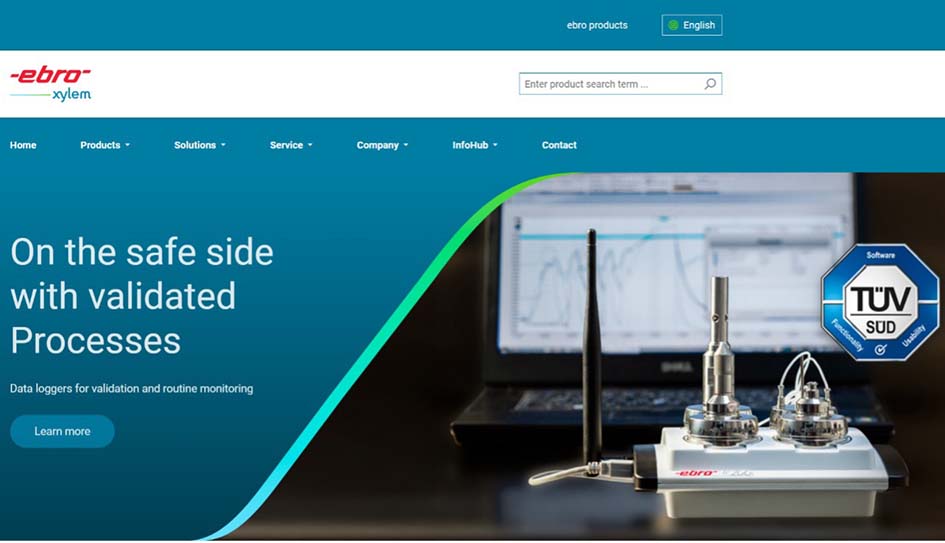
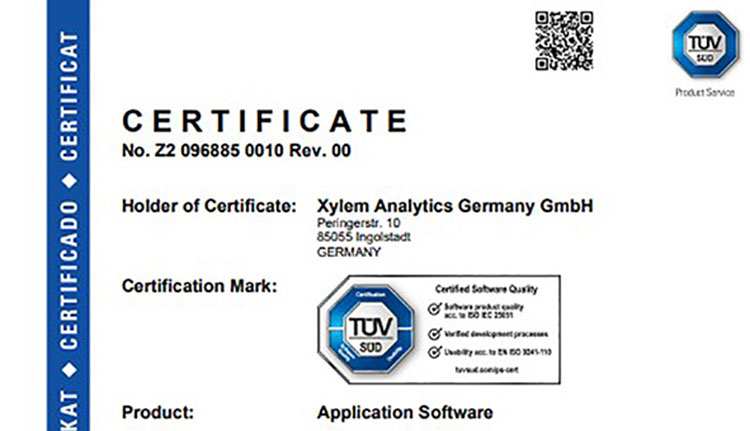
The TÜV SÜD-certified software platform ensures that evaluation and documentation meet applicable regulatory requirements.
Conclusion: Routine and Validation Data Loggers as a Key Element of Compliance
The requirements of DIN EN ISO 15883 and ISO 17665 can only be fulfilled in practice through the systematic use of:
- Validation loggers for performance qualification and requalification
- Routine loggers for continuous process monitoring
Together, they provide:
- The basis for regulatory compliance and objective proof
- A reliable instrument for process monitoring
- A key prerequisite for audit readiness.
The development of ebro systems exemplifies the transformation of process monitoring technology: from simple measuring devices to integral components of validated and continuously monitored reprocessing processes. Over the past 30 years, this has resulted in a technology platform that is now established as an industry standard for validation and routine monitoring – transforming ebro from a specialized supplier into a leading solution provider in the field of validation measurement technology.